

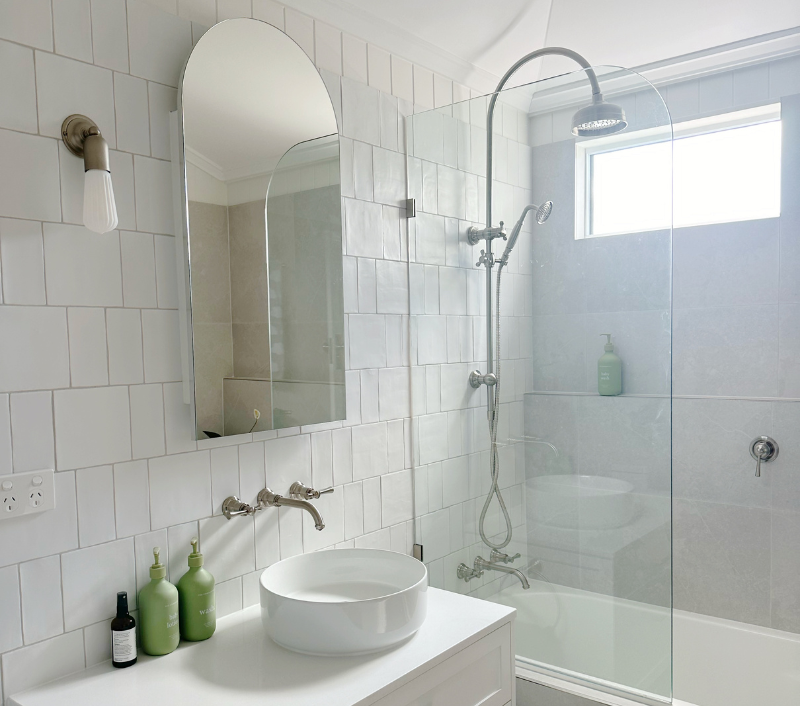
When planning a bathroom renovation, it’s easy to spend hours comparing tiles, tapware and vanity designs while leaving the shower screen until much later.
After all, it’s just a piece of glass, isn’t it?
Not quite.
The type of shower screen you choose affects how easily you can enter the shower, how much space you have to move around, how well water stays within the shower area and even how much cleaning you’ll need to do.
For Brisbane homeowners renovating an ensuite or family bathroom, it’s worth considering the shower screen as part of the overall bathroom layout, rather than simply a finishing touch.
Frameless, Semi-Frameless or Framed?
There are three common styles of shower screen, each with different advantages.
Frameless Shower Screens
Frameless shower screens use glass panels supported by discreet hinges, brackets or channels rather than a prominent surrounding frame.
They’re particularly popular in contemporary bathroom renovations because they create a clean, open appearance.
With fewer visible framing elements, a frameless screen can help a smaller bathroom feel less visually crowded.
There are also fewer metal channels where soap residue and grime can accumulate, although the glass, hinges and seals still require regular cleaning.
The trade-off is that frameless screens generally cost more and need careful planning around glass sizes, fixing locations and the finished wall surfaces.
Semi-Frameless Shower Screens
Semi-frameless screens offer a middle ground.
They retain some framing while reducing the amount of metal surrounding the glass.
This can create a relatively streamlined appearance without the additional cost of a fully frameless design.
They’re worth considering when you want a contemporary bathroom but need to balance appearance, functionality and budget.
Framed Shower Screens
Framed shower screens use a more substantial perimeter frame around the glass.
They can be a practical option for bathrooms where cost, enclosure design and water containment are priorities.
Modern framed screens are available in different finishes, so they don’t necessarily have to look dated.
The main consideration is maintenance. Tracks, seals and frame corners can collect soap residue and require attention when cleaning.
Don’t Forget About the Door
One of the most overlooked aspects of shower screen selection is the way the door opens.
Imagine stepping out of the shower and finding the door almost touches the vanity.
Or discovering that the shower entrance feels awkward because there’s insufficient room to move comfortably past the toilet.
These are layout issues that should be considered before the bathroom is built.
Hinged and Pivot Doors
Hinged and pivot doors can provide a generous, comfortable entrance.
However, they need suitable clearance to operate safely without interfering with nearby fixtures.
Consider the position of the vanity, toilet, towel rails and other fittings when assessing where the door will open.
Sliding Shower Doors
Sliding doors can be particularly useful in compact ensuites because they don’t require the same floor space for a swinging door.
The trade-off is that the available entry width and the cleaning requirements of tracks and rollers depend on the selected system.
Walk-In Shower Panels
Walk-in showers with a fixed glass panel have become a popular choice for modern bathroom designs.
Without a conventional door, they can create a more open appearance and simplify access.
However, they aren’t automatically the best solution for every bathroom.
The shower’s dimensions, showerhead position, drainage, floor falls and potential water splash all need to be considered.
A walk-in shower that looks beautiful in a photograph can be frustrating if water regularly escapes into the surrounding bathroom.
Think About Cleaning Before Choosing the Glass
How much effort do you want to put into cleaning your new bathroom?
It’s a simple question, but it can influence several design decisions.
Clear glass can make a bathroom feel open and spacious. However, soap residue, water marks and mineral deposits can become visible with regular use.
Textured, fluted or privacy glass can create a different visual effect, although some surface finishes may require more careful cleaning.
Framing and hardware also matter.
A shower screen with fewer channels and complicated fittings may be easier to wipe down, but no screen is completely maintenance-free.
When planning your renovation, consider how easy it will be to reach and clean both sides of the glass, along with the hinges, seals and corners.
Why Shower Screen Planning Should Happen Before Tiling
A shower screen is connected to several other parts of the bathroom design.
Its position can affect where tiles finish, how the shower entrance is arranged and where suitable support is required for glass fittings.
The location of the showerhead also matters.
A fixed panel that works with one showerhead position might provide inadequate splash protection with another.
It’s also important to consider the finished wall dimensions rather than relying only on measurements taken before the renovation begins.
Once waterproofing, tiling and other finishes are complete, the available opening may differ from the original room measurements.
Planning the intended screen configuration early helps coordinate these details, while final measurements and installation requirements can be confirmed at the appropriate stage.
Choosing a Shower Screen for a Small Ensuite
Small bathrooms often require the most careful planning.
In a compact ensuite, every centimetre matters.
A large swinging shower door can interfere with surrounding fixtures, while a poorly positioned fixed panel may make the shower difficult to enter.
A sliding enclosure, corner configuration or carefully designed hinged screen might offer a better result.
It’s worth thinking about the room from the perspective of everyday use.
Can you comfortably enter and leave the shower? Is there enough space to dry yourself? Can you reach the towel without crossing the bathroom? Is the glass easy to clean?
These practical questions can be just as important as the appearance of the finished space.
Your Shower Screen Should Suit the Whole Bathroom
One of the most effective ways to create a cohesive bathroom is to consider the shower screen alongside the other finishes and fixtures.
For example, black shower screen hardware can complement black tapware, while brushed metal fittings may suit a softer, more understated palette.
A frameless screen can allow feature tiles to remain the focal point, rather than breaking up the view with additional framing.
However, matching every finish isn’t always necessary.
A thoughtfully designed bathroom should feel balanced, with each element contributing to the overall space.
Plan Your Bathroom Renovation With Briswest Renovations
A beautiful bathroom should be just as comfortable and practical to use as it is to look at.
At Briswest Renovations, we specialise in kitchen and bathroom renovations across Brisbane’s western suburbs and surrounding inner-city areas.
From shower configurations and bathroom layouts to cabinetry, tiles and finishing details, our approach focuses on creating spaces that work for the people living in them.
Whether you’re renovating a compact ensuite in Toowong, updating a family bathroom in Indooroopilly or planning a complete bathroom transformation in Bardon, we’re here to help bring the different elements together.
Planning a bathroom renovation?
Contact Briswest Renovations to discuss your ideas and discover how thoughtful planning can make a difference to your finished bathroom.
Visit briswestrenovations.com.au or call 07 3554 1329.