

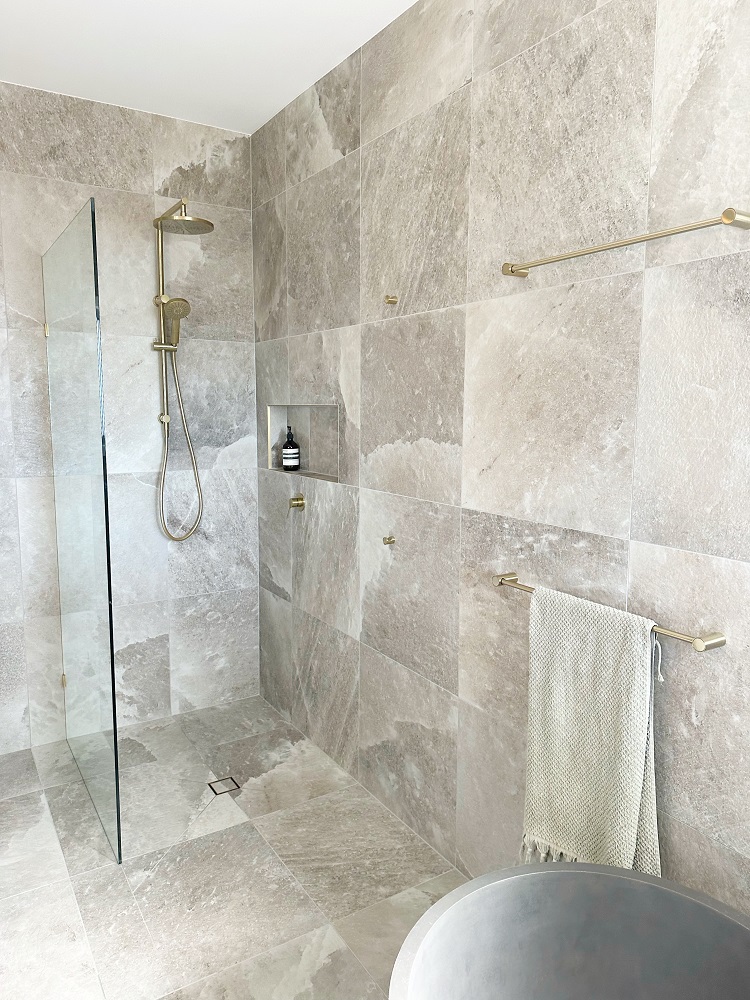
Tiles can set the tone for an entire renovation. They can make a bathroom feel calm, give a kitchen splashback personality or help a new space feel connected to the character of the home.
But choosing tiles is not only a question of colour and pattern. The material, finish, size, edge, grout and intended location all affect how the finished room will look, how easy it will be to maintain and how it needs to be installed.
A beautiful sample in a showroom can be a good starting point. The better question is whether that tile is right for the room, the way the household lives and the surfaces around it.
Why Tile Selection Is More Technical Than It Looks
Two tiles that look almost identical can perform very differently. One may be designed only for walls, while another is suitable for floors. A bathroom floor tile needs different qualities from a kitchen splashback, and an outdoor tile has another set of requirements again.
Before falling in love with a finish, check:
- whether it is rated for walls, floors or both
- whether its slip resistance is appropriate for the intended area
- whether it can be used in a shower, outdoors or around a pool
- whether it requires sealing or a particular cleaning routine
- how much variation to expect between individual pieces
- whether the size and thickness suit the planned layout, falls and adjoining finishes
This is particularly important in a bathroom renovation, where the tile selection must work with waterproofing, drainage, floor falls, niches, screens and transitions to other rooms.
The Main Tile Types, With Their Pros and Cons
Ceramic Tiles
Ceramic tiles are commonly used on bathroom walls, kitchen splashbacks and laundry walls. They are generally lighter and easier to cut than porcelain, with a broad choice of colours, shapes and glazed finishes.
Advantages: Ceramic is often an accessible option, offers enormous design variety and can be a practical choice for wall applications.
Points to consider: Not every ceramic tile is suitable for floors or demanding wet areas. The product specification matters, so never assume that a wall tile can also be used underfoot.
Porcelain Tiles
Porcelain is a dense, low-absorption type of ceramic tile. It is widely used on floors and walls and can reproduce the appearance of limestone, travertine, marble, terrazzo, concrete and timber with much less maintenance than many natural materials.
Advantages: Porcelain is durable, moisture resistant and available in formats ranging from small pieces to large slabs. Correctly rated products can work in bathrooms, kitchens, laundries and outdoor areas.
Points to consider: It is harder and heavier than standard ceramic, which can make cutting, handling and installation more involved. A porcelain label does not automatically make a tile suitable for every location. Its finish, slip rating and manufacturer specifications still need to be checked.
Natural Stone
Marble, travertine, limestone, granite and other natural stones have colour, veining and movement that cannot be repeated exactly. For homeowners who appreciate materials that develop character over time, stone can be a beautiful choice.
Advantages: Every piece is individual, and the result can feel established, tactile and connected to the architecture of the home.
Points to consider: Many stones are porous and may be vulnerable to staining, scratching or etching. Sealing and ongoing care may be required, and natural variation needs to be embraced rather than treated as a defect. The stone, adhesive, grout and sealer should be considered as one system.
Terrazzo and Terrazzo-Look Tiles
Genuine terrazzo contains chips of materials such as marble, granite, quartz or glass in a cement or resin base. Terrazzo-look porcelain uses printed and textured surfaces to create a similar visual effect.
Advantages: Both can introduce subtle movement and colour. Genuine terrazzo has depth and individuality, while porcelain versions are generally easier to maintain and can offer greater consistency.
Points to consider: Real terrazzo can be heavy, comparatively expensive and may require sealing. With a printed version, look at several full tiles together to check the scale of the aggregate and how often the pattern repeats.
Mosaics and Small-Format Tiles
Mosaics include squares, rounds, hexagons, finger tiles and many irregular forms. Their small size can make them useful on shower floors, curved surfaces, niches and detailed feature areas.
Advantages: Small pieces can follow changes in level more readily than a large rigid tile. Their many grout joints can also provide additional texture underfoot, although the tile’s tested suitability remains important.
Points to consider: More grout means more visual detail and more joints to maintain. Sheet lines can become obvious if the set-out and installation are not handled carefully. Mosaics also tend to involve more labour.
Handmade and Handmade-Look Tiles
Handmade tiles, including zellige-style products, are valued for their rippled surfaces, uneven edges and changes in glaze. Machine-made versions can provide a related look with more predictable sizing.
Advantages: They reflect light beautifully and give a splashback or bathroom wall a sense of depth without needing a complicated pattern.
Points to consider: Variation is part of the appeal, but it also makes set-out, spacing and cutting more demanding. Some genuine handmade products need sealing or special installation methods. It is worth viewing a larger installed area rather than judging the effect from one perfect sample.
Cement, Encaustic and Patterned Tiles
True encaustic cement tiles carry pigment through the face of the tile, while many easier-care alternatives are glazed ceramic or porcelain printed with an encaustic-style design.
Advantages: Pattern can bring character to an entry, powder room, laundry or selected bathroom surface. It can work especially well when the design language relates to the age and proportions of the home.
Points to consider: Cement products are porous and generally require careful sealing and maintenance. Strong patterns can dominate a small room, and matching them across cuts, corners and floor wastes takes planning.
Does Tile Size Matter?
Very much. Large-format tiles can create a calm surface with fewer grout lines, but they are not necessarily simpler to install. The walls and floors need to be suitably flat, the pieces are heavier to handle and the layout must account for cuts, corners, niches and drainage.
In a shower, the proposed floor falls and waste position may affect the practical tile size. A large tile may need carefully planned cuts, while a mosaic can follow the falls more easily. That decision should be made with the complete drainage and set-out plan in mind.
Rectified tiles have mechanically finished edges that allow a crisp, consistent layout when installed correctly. Their precision is appealing, but it can also make uneven substrates or poor alignment more obvious.
There is no universal rule that large tiles make a small room look bigger or that small tiles belong only in compact spaces. Proportion, colour, grout contrast and layout all influence the result.
What Tile Looks Are Popular in 2026?
Current Australian tile forecasts are leaning towards warmth, texture and materials that feel connected to nature. The most useful trends are not necessarily the loudest. They are the ones that can add character while still working with the home over time.
Warm Stone-Look Porcelain
Limestone, travertine and quartzite-inspired porcelains in sand, oat, cream and soft taupe are replacing the colder grey surfaces that dominated for years. They offer the visual softness of stone with a more predictable finish and maintenance routine.
Earthy Colour
Clay, terracotta, olive, moss, muted blue and warm brown are appearing in splashbacks, powder rooms and feature areas. These colours feel more grounded than the sharp black-and-white schemes of the recent past.
Texture and Glaze Variation
Handmade-look surfaces remain popular because they react to changing light. A softly rippled tile can add interest through shadow and reflection, even when the colour itself is restrained.
Large Formats Used as a Calm Base
Large-format porcelain is being used across floors and walls to reduce visual interruption. The most enduring applications tend to use it as a quiet background, with detail introduced through joinery, lighting, tapware or one smaller area of feature tile.
A More Considered Connection Between Indoors and Out
Coordinated internal and external tile ranges can help connect a kitchen or living area to a terrace. The exterior version must be selected for that exact application, rather than continuing an internal tile outside simply because it looks the same.
What Is Being Used More Selectively?
A tile does not become unusable because a trend changes. Often it is the way a finish is combined or repeated that begins to feel dated.
- Cool grey across every surface: Grey still has a place, but warmer neutrals are now being used to create rooms that feel softer and more inviting.
- Default white subway tile with dark grout: Subway tiles are a classic format, not a dead trend. However, the familiar combination of flat white tile, black grout and black fittings is no longer the automatic choice. Tonal grout, colour, texture and different layouts can give the format a fresh direction.
- Several competing feature tiles: A patterned floor, dramatic shower wall and statement splashback can all be attractive separately. Together, they may make the room feel unsettled. One clear focal point is often stronger.
- Busy printed stone effects: Digital printing has improved enormously, but obvious pattern repetition can reveal the imitation. Check multiple faces and consider how the veining will meet across a larger wall.
- Tiny mosaics over very large areas: They can still be excellent in the right place, but the visual grid, installation time and amount of grout make them a more deliberate choice.
The goal is not to avoid personality. It is to give the strongest material enough room to be appreciated.
Do Not Choose Grout as an Afterthought
Grout colour changes how a tiled surface reads. A close colour match allows the tile to appear as one field, while a contrasting grout emphasises every joint and makes the layout more graphic.
That means grout affects both design and maintenance. A highly contrasting choice draws attention to any irregularity. Very light grout may show discolouration more readily in hard-working areas. The number and width of joints also influence how much cleaning the surface will require.
Set-out matters just as much. Before the first tile is laid, the plan should consider sightlines, full and cut tiles, corners, cabinetry, tapware, niches, windows and floor wastes. As we discussed in our article on the small details that separate an average renovation from a great one, these decisions have a significant effect on the finished room.
See the Tile in Your Own Home Before Deciding
Showroom lighting can change how colour, sheen and texture appear. Take samples into the room and look at them in morning light, afternoon light and under the artificial lighting you plan to use.
Place the tile beside the actual cabinetry, benchtop, paint, flooring and tapware samples. If the product has strong variation, ask to see several pieces or an installed display. A single sample cannot show the full range.
It is also wise to confirm supply, lead times and the quantity of extra tiles to retain for future repairs. Shade and calibre can vary between production batches, so finding an exact match years later may be difficult.
The Best Tile Is the One That Works With the Whole Renovation
A good tile selection balances appearance, performance, installation and maintenance. It also needs to make sense beside every other decision in the room.
For a kitchen renovation, that might mean checking the splashback against the benchtop, cabinetry and natural light. In a bathroom, it means coordinating the wall and floor finishes with drainage, waterproofing, fixtures and the way the room will be cleaned.
At Briswest Renovations, the builder, interior designer and trades consider these choices together. That allows the tile layout and installation requirements to be resolved before they become expensive changes on site.
If you are planning a kitchen, bathroom or laundry renovation, contact Briswest Renovations to discuss the space, the selections and the practical details that will help it work beautifully for years to come.